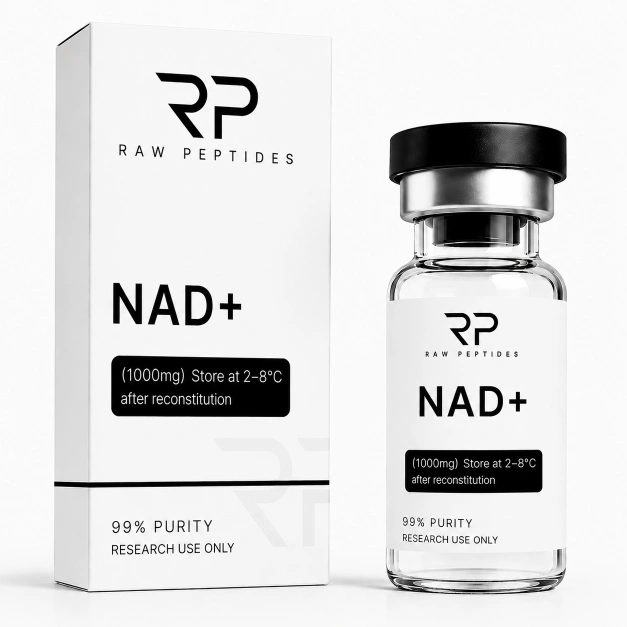
Nicotinamide adenine dinucleotide (NAD⁺) is a naturally occurring coenzyme central to redox reactions, bioenergetic processes, and molecular signaling. In laboratory and preclinical models, NAD⁺ has been studied for its role in mitochondrial function, genomic pathway signaling, and regulation of molecular resilience. Research continues to explore its influence on sirtuin activation, oxidative stress response, and downstream signaling pathways.
NAD⁺ was first identified in the early 20th century during research into fermentation and molecular respiration. Its structure and biochemical role were later clarified, establishing it as a key coenzyme in enzymatic and signaling reactions. In recent decades, research has expanded to its involvement in genomic pathway signaling, age-associated biology, and molecular survival pathways, with growing use as a research tool in models of bioenergetic dynamics and stress response.
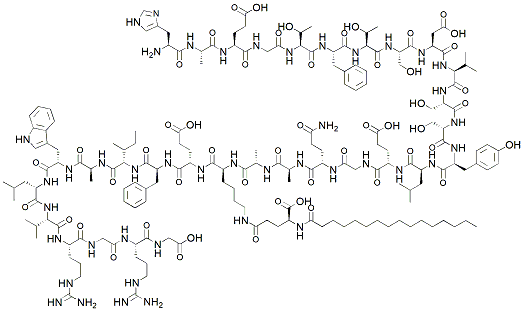
CAS #: 53-84-9
Molecular Formula: C₂₁H₂₇N₇O₁₄P₂
Molecular Weight: 663.4 g/mol
PubChem ID: 5892
NAD⁺ has been investigated in bioenergetic, molecular, and systemic models, with research highlighting its role in mitochondrial function, redox dynamics, and molecular remodeling processes. Studies have also examined its influence on oxidative stress, genomic pathway signaling, and overall molecular resilience in preclinical settings.
Key Areas of Research:
Bioenergetic: Mitochondrial function, redox dynamics
Molecular: Genomic signaling, oxidative stress, viability
Systemic: Signaling, resilience, pathway dynamics
Together, these findings suggest broad experimental potential for NAD⁺ in supporting molecular and systemic biology. By engaging core bioenergetic pathways and influencing remodeling and stress responses, NAD⁺ provides a versatile platform for research into redox dynamics, molecular signaling, and systemic resilience in laboratory settings.