
DP3-R is a synthetic investigational peptide developed as a multi-pathway agonist. It is currently being studied for its potential effects on receptor-mediated signaling, molecular dynamics, and endocrine function in preclinical research models. By activating multiple target receptor subtypes, DP3-R demonstrates broad systemic effects under investigation for their relevance in endocrine and pathway-level research.
The development of DP3-R builds on decades of research into peptide signaling science. Early studies with single pathway agonists established their role in downstream signaling and receptor activity. Subsequent research expanded to dual agonist frameworks, paving the way for DP3-R, which uniquely integrates three pathway targets. This multi-agonist design reflects a new direction in peptide research aimed at investigating broader receptor-mediated modulation in preclinical laboratory settings.
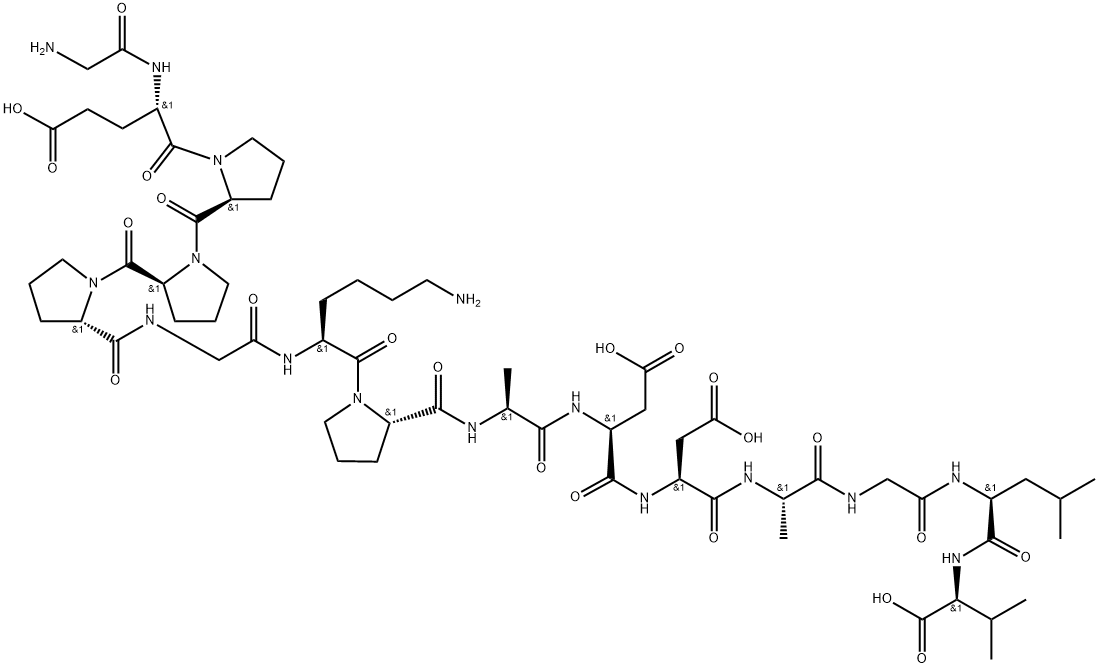
CAS #: 2381089-83-2
Molecular Formula: C₂₂₁H₃₄₂N₄₆O₆₈
Molecular Weight: 4845.44 g/mol
PubChem ID: 474492335
DP3-R has been examined in endocrine and systemic models, with studies highlighting its influence on receptor binding kinetics, downstream signaling cascades, lipid pathway dynamics, and integrated endocrine pathways. Research also points to its role in multi-system signaling and pathway characterization in preclinical and laboratory settings.
Key Areas of Research:
Endocrine: Receptor binding, signaling, cascades
Pathway: Target subtypes, modulation, dynamics
Vascular: Lipid pathways, hepatic signaling, markers
Systemic: Multi-pathway signaling, resilience, characterization
Together, these findings suggest broad experimental potential for DP3-R across endocrine, vascular, and systemic models. By engaging multiple pathway targets, it provides a versatile research platform for studying downstream signaling cascades and integrated molecular responses across diverse biological systems.
Jastreboff A.M. et al., New England Journal of Medicine, 2023