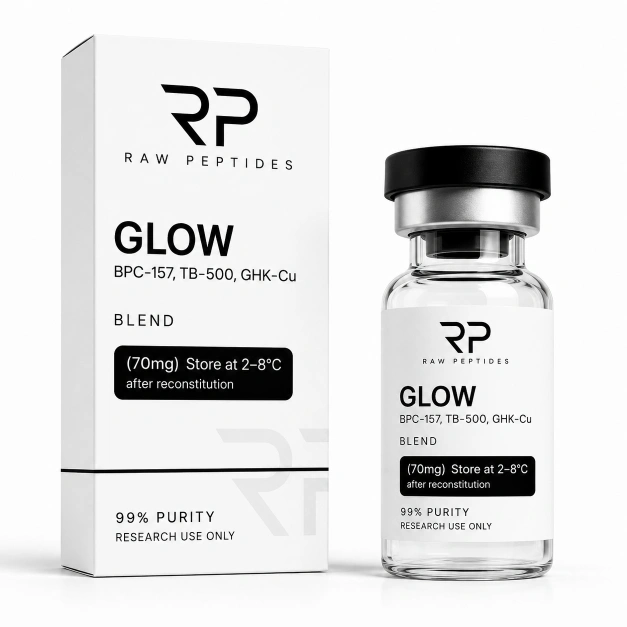
The GLOW Blend combines three synthetic peptides studied for their roles in molecular signaling and pathway dynamics: GHK-Cu, BPC-157, and TB-500. Together, these peptides are investigated for their influence on angiogenesis, extracellular matrix remodeling, and systemic signaling pathways. In laboratory and preclinical models, the combination provides a platform for exploring synergistic effects in matrix integrity, vascular formation, and molecular resilience.
The concept of the GLOW Blend arises from decades of research into individual signaling peptides. GHK-Cu was first identified in biological plasma samples in the 1970s and later studied for gene regulation and matrix remodeling activity. BPC-157 was synthesized in the 1990s as a gastric protein fragment analog and has since been researched for angiogenic and structural processes. TB-500, derived from thymosin beta-4, traces its research lineage to thymus peptide studies in the 1960s and is recognized for its effects on molecular migration and angiogenesis. Combined, these peptides represent a convergence of experimental research lines.
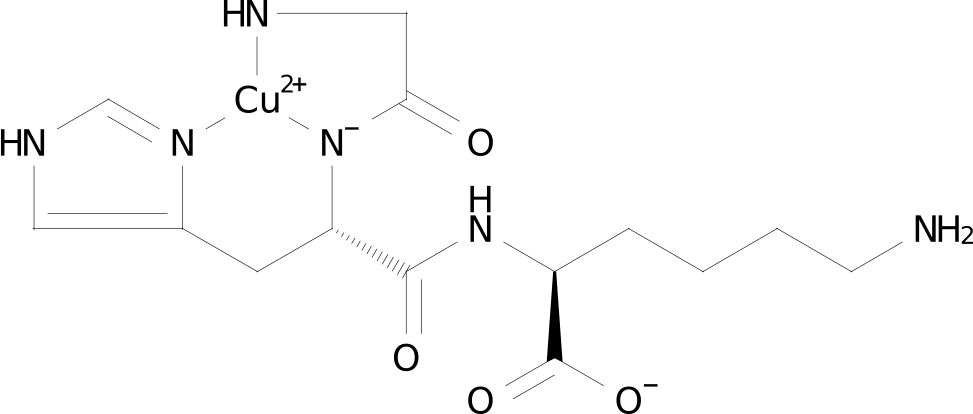
CAS #: 49557-75-7
Molecular Formula: C₁₄H₂₄CuN₆O₄
Molecular Weight: 340.9 g/mol
PubChem ID: 5311476
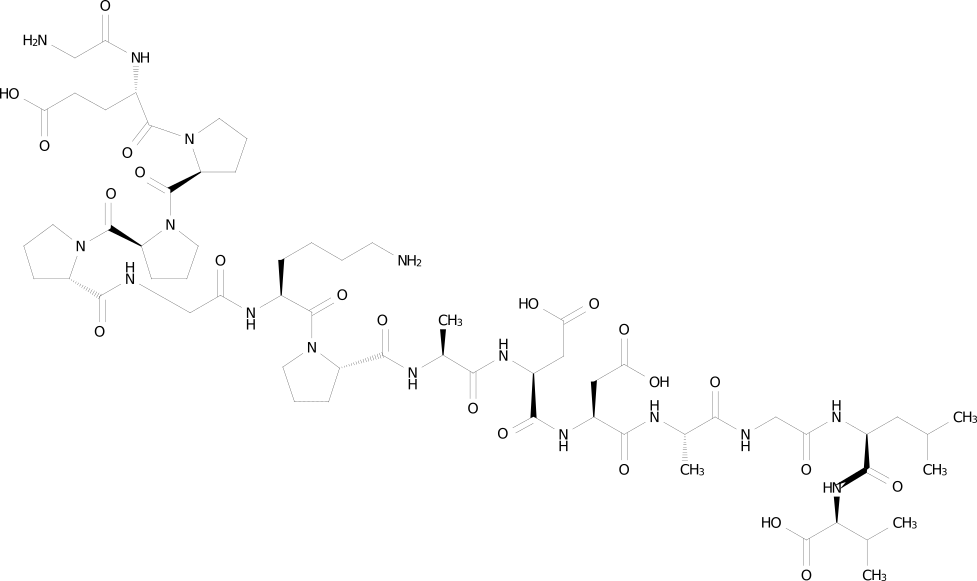
CAS #: 137525-51-0
Molecular Formula: C₁₄H₂₄CuN₆O₄
Molecular Weight: 340.9 g/mol
PubChem ID: 5311476

CAS #: 77591-33-4
Formula: C₂₁₂H₃₅₀N₅₆O₇₈S
Molecular Weight: 4963.5 g/mol
PubChem ID: 16132321
The GLOW Blend, which combines GHK-Cu, BPC-157, and TB-500, has been studied across structural, epithelial, vascular, and systemic models. Research highlights its activity in collagen organization, molecular migration, angiogenesis, and molecular signaling. Together, these peptides complement one another by engaging pathways linked to matrix remodeling, pathway dynamics, and resilience in preclinical settings.
Key Areas of Research:
Structural: Collagen, matrix, tendon/ligament
Epithelial: Migration, matrix signaling, follicle dynamics
Vascular: Angiogenesis, nitric oxide, formation
Systemic: Signaling, viability, pathway dynamics
Together, these findings suggest broad experimental potential for the GLOW Blend across multiple biological pathways. By combining structural support, vascular formation, and epithelial remodeling with systemic signaling, the GLOW Blend provides a versatile platform for research into molecular dynamics, matrix characterization, and overall biological resilience in laboratory settings.